Cerchi d’inchiostro · Circles of Ink

Authors, ideas and systems for reading the present.

Cerchi d’inchiostro is an editorial project built around authors rather than around summaries. Each guide reconstructs a system of thought, identifies a human problem and asks where that system still exerts pressure on contemporary life.

English triad · 08

Who — and what — forms a people?

Language and institutions; experience and desire; environment and cultural power.

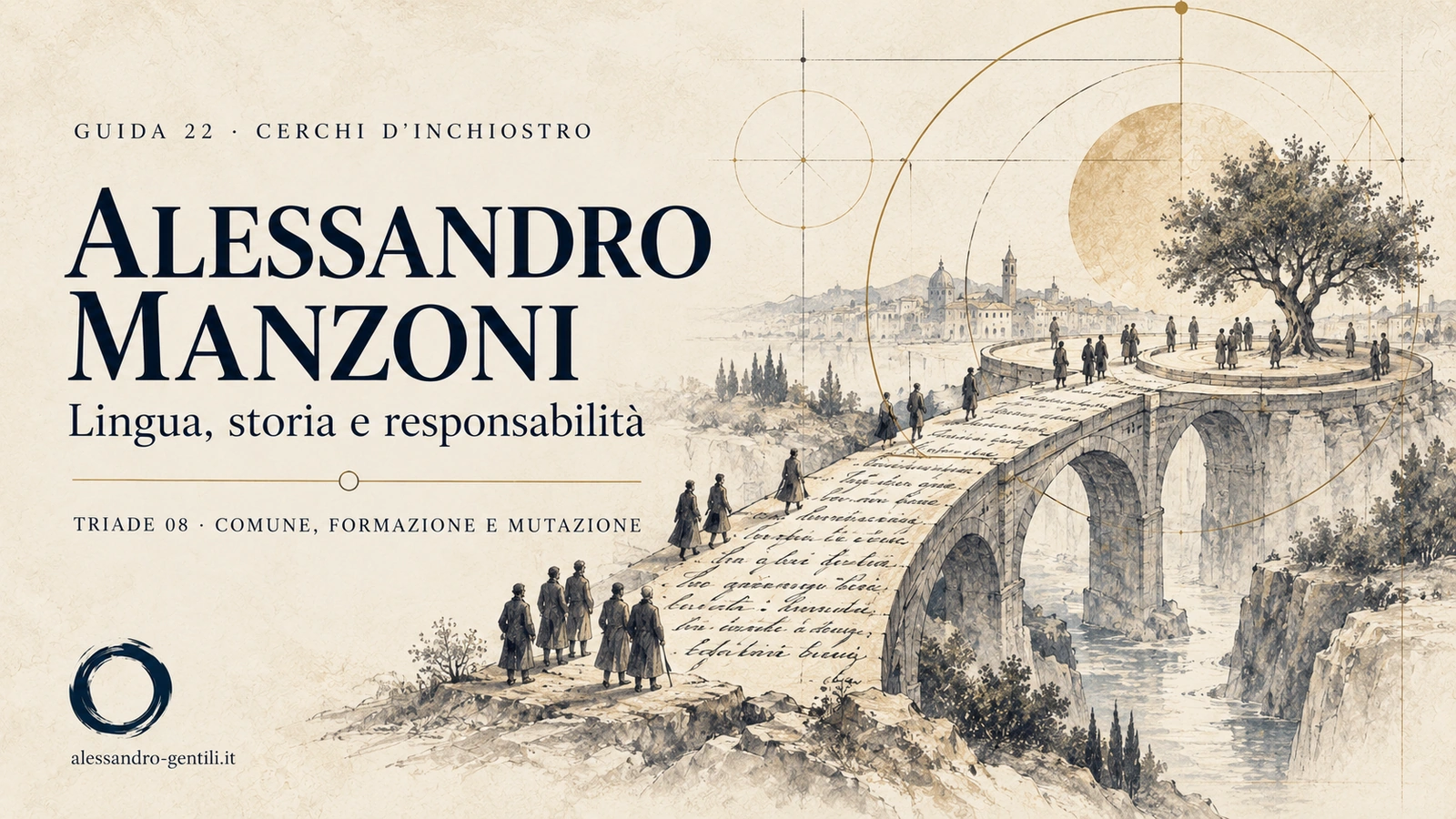
Illustrated cover for Alessandro Manzoni: language, history and responsibility.

Guide 22

Alessandro Manzoni

Language, history and responsibility.

Judgment under pressure and the fragile construction of a shared world.

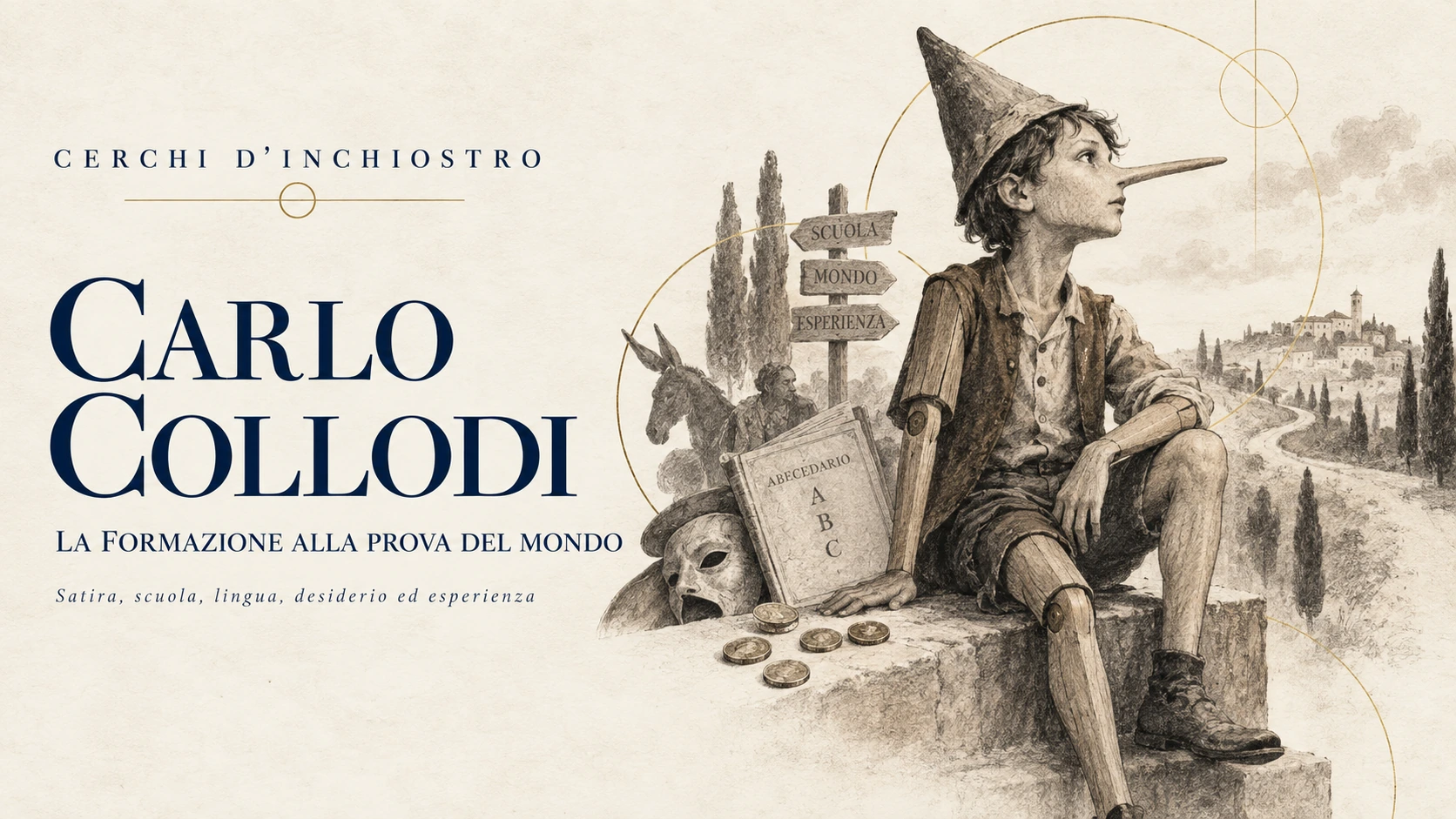
Illustrated cover for Carlo Collodi and formation tested by the world.

Guide 23

Carlo Collodi

Pinocchio, formation and the trial of the world.
How judgment is learned through desire, error, bodies and consequences.

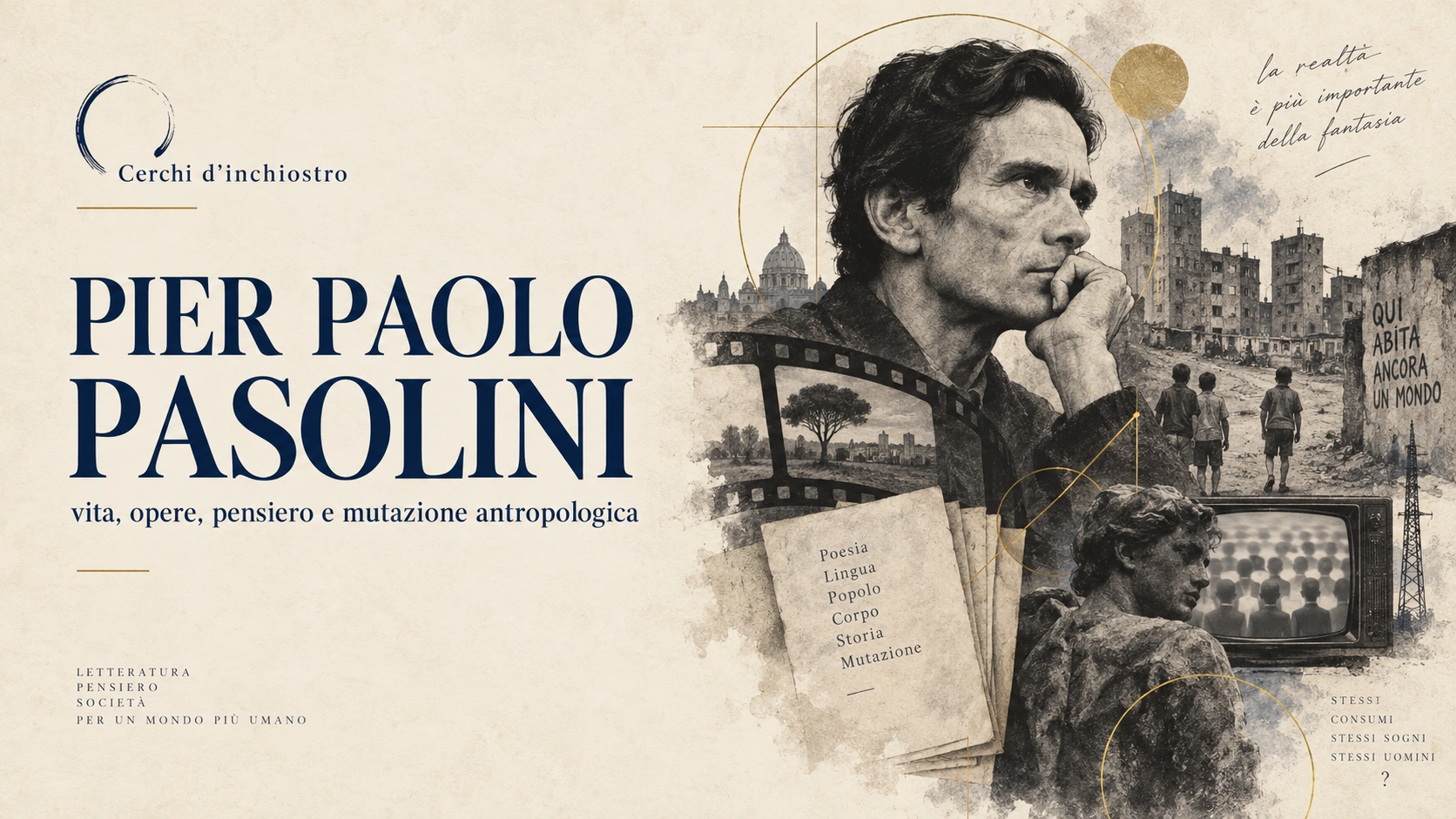
Illustrated cover for Pier Paolo Pasolini and anthropological mutation.

Guide 24

Pier Paolo Pasolini

Anthropological mutation and consumer culture.

The environment as pedagogy: things, images, language and desire form people before explicit teaching does.

English triad · 01

Truth, language, power.

Truth and education; exile and language; political power and effectual reality.
Editorial cover for Plato: ideas, truth and power.

Guide 01

Plato

Ideas, truth and political power.

Socrates, education and the governance of visibility.

Editorial cover for Dante: exile, language and a vision of the world.

Guide 02

Dante Alighieri

Exile, language and the Divine Comedy.
The loss of the city transformed into language, form and orientation.

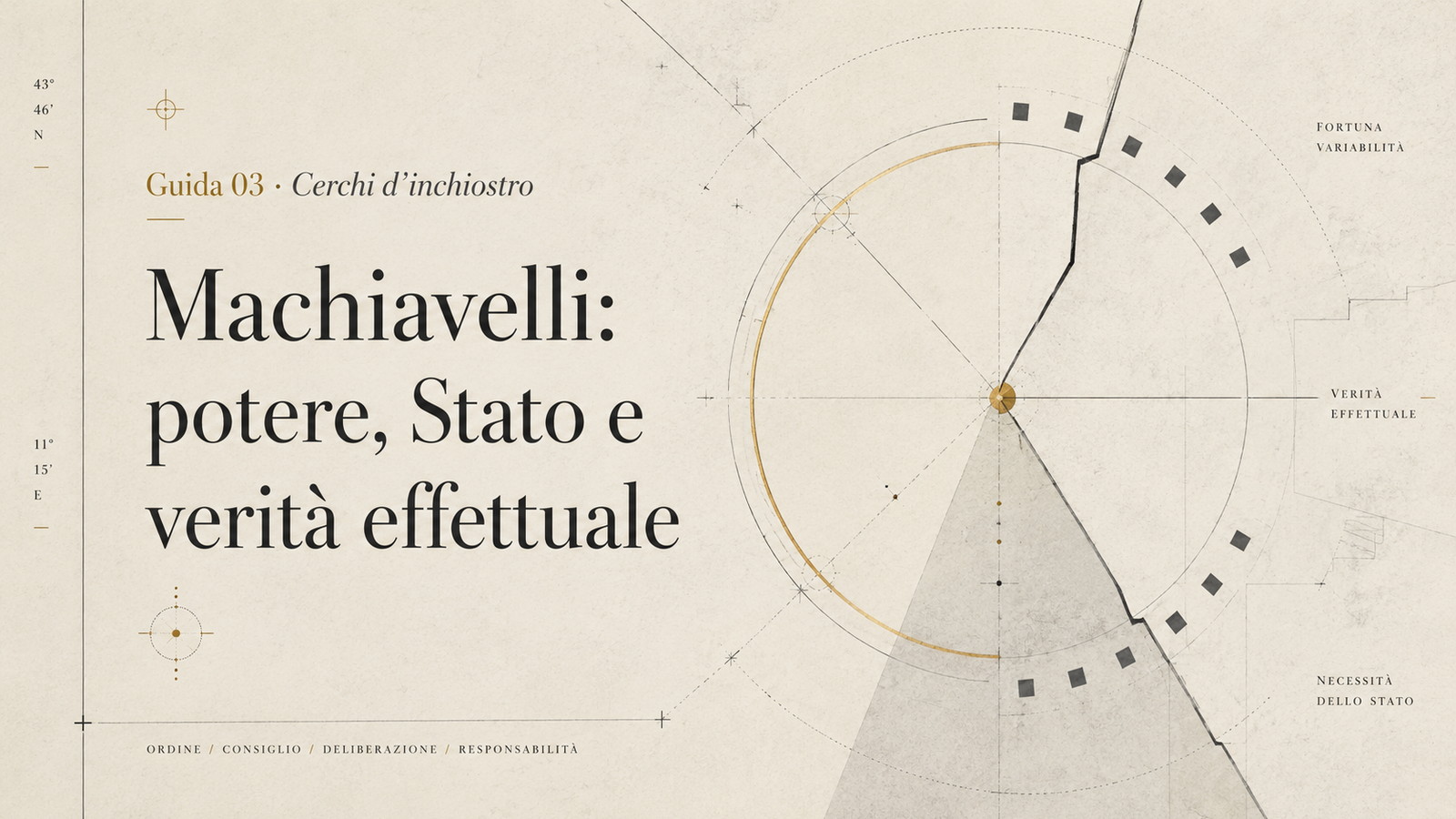
Editorial cover for Machiavelli: power, state and effectual truth.

Guide 03

Niccolò Machiavelli

Power, the state and effectual truth.

Decision, institutions and the distance between political language and political reality.

English triad · 02

Capital, values, desire.

Economic form; crisis of values; the disproportion between desire and a finite world.
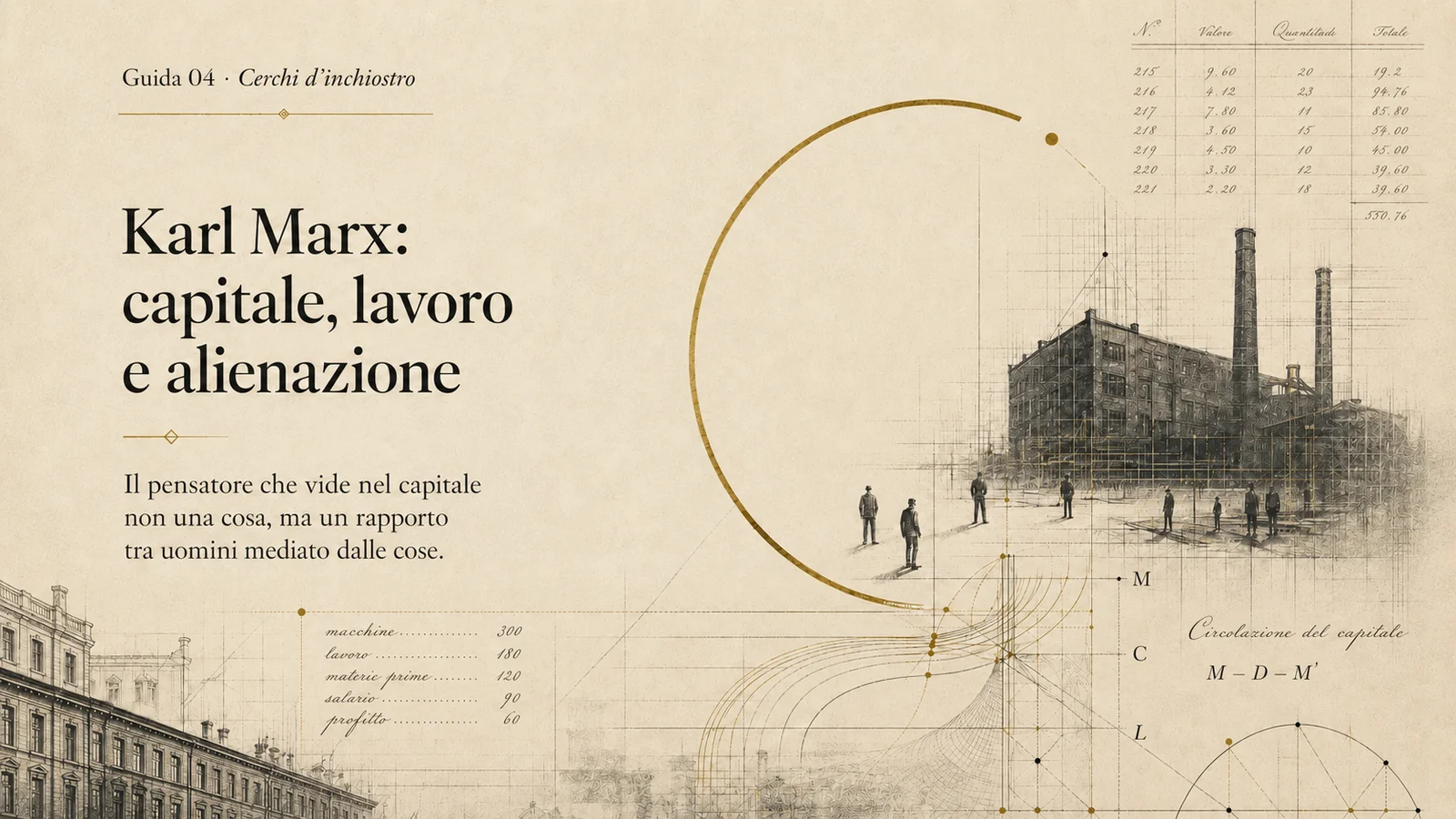
Editorial cover for Karl Marx: capital, labor and alienation.

Guide 04

Karl Marx

Capital, labor and alienation.

How social relations can return to their makers as impersonal economic necessity.

Editorial cover for Friedrich Nietzsche: nihilism, values and the death of God.

Guide 05

Friedrich Nietzsche

Nihilism, values and the death of God.
What happens when old foundations collapse but obedience survives in new forms.

Editorial cover for Giacomo Leopardi: desire, infinity and modernity.

Guide 06

Giacomo Leopardi

Desire, infinity and modernity.

The human demand for fullness before a world whose satisfactions remain finite.

English triad · 03

Time, form, disenchantment.

Possession of time; form and purpose; rationalized systems and the loss of meaning.
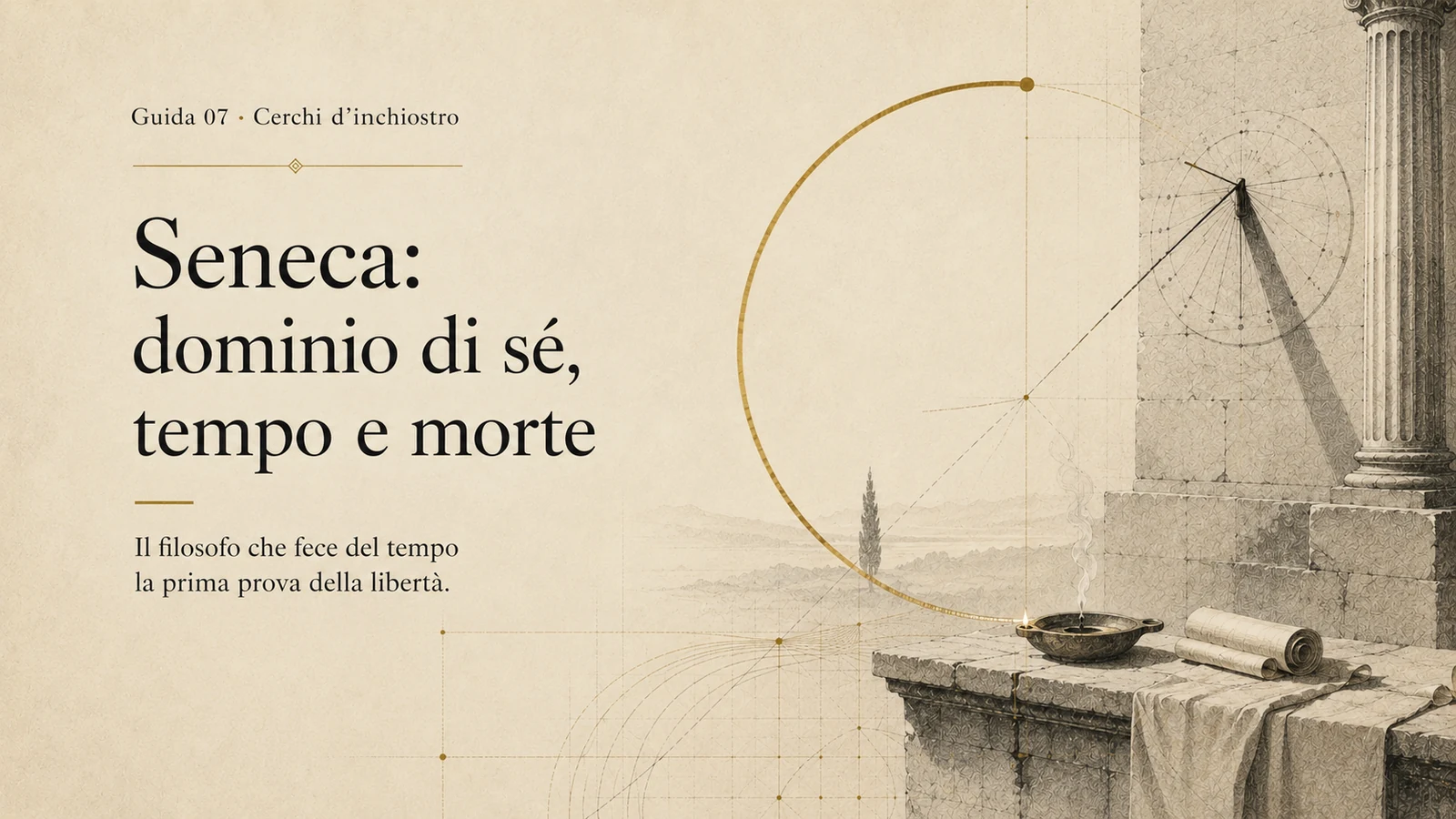
Editorial cover for Seneca: time, self-mastery and death.

Guide 07

Seneca

Time, self-mastery and death.

Freedom under pressure and the struggle to keep one’s time from being captured.

Editorial cover for Aristotle: form, purpose and actuality.

Guide 08

Aristotle

Form, purpose and actuality.

Why possibility needs form, habit and an end in order to become completion.

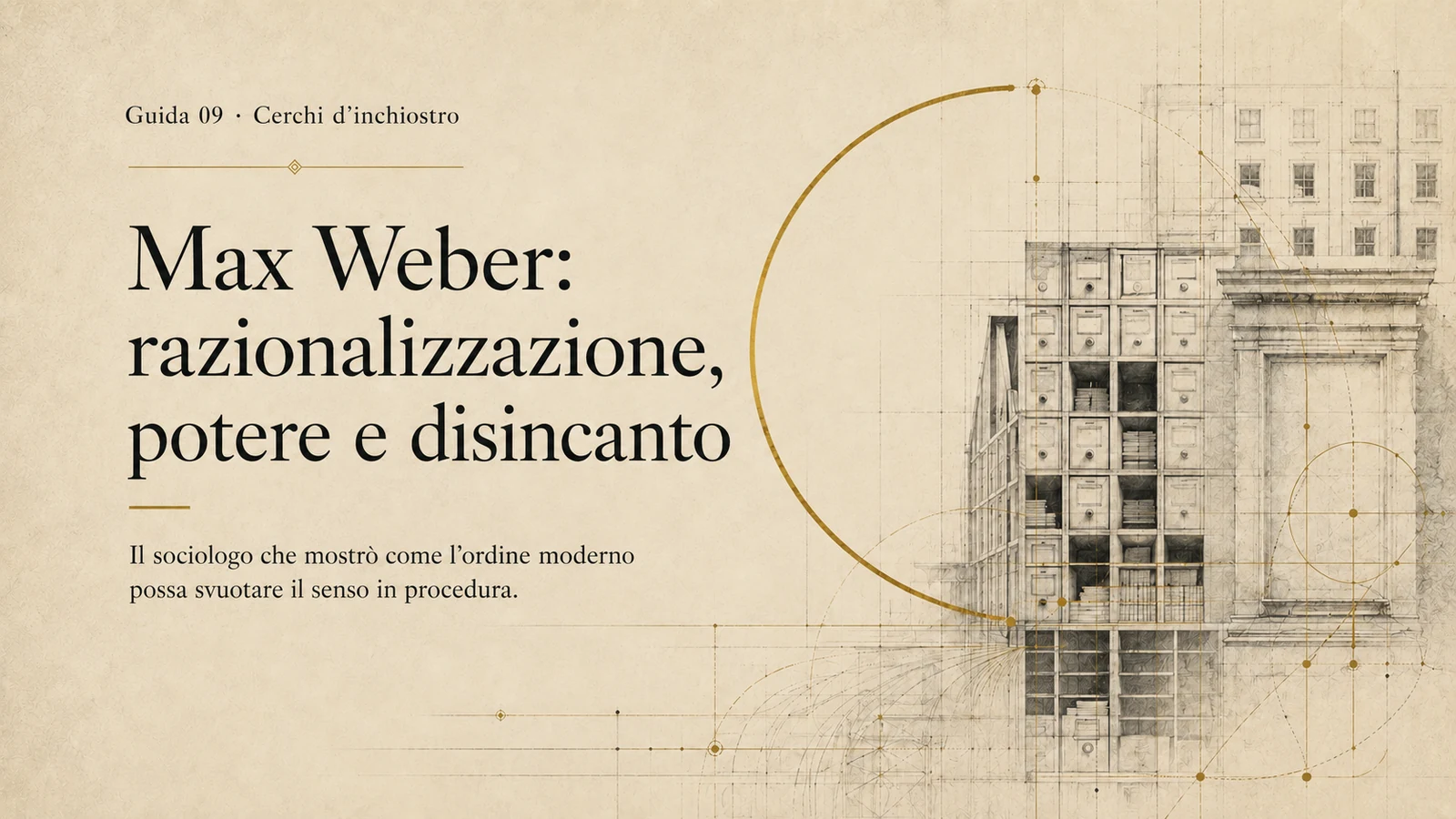
Editorial cover for Max Weber: rationalization, power and disenchantment.

Guide 09

Max Weber

Rationalization, power and disenchantment.

The modern apparatus can become extraordinarily competent while losing the question of its purpose.

English triad · 04

Unconscious, hegemony, sovereignty.

Inner authority; cultural consent; vulnerability, protection and political order.
Editorial cover for Sigmund Freud: unconscious, desire and civilization.

Guide 10

Sigmund Freud

Unconscious, desire and civilization.

The subject is divided before it ever enters institutions as citizen, worker or member of a group.

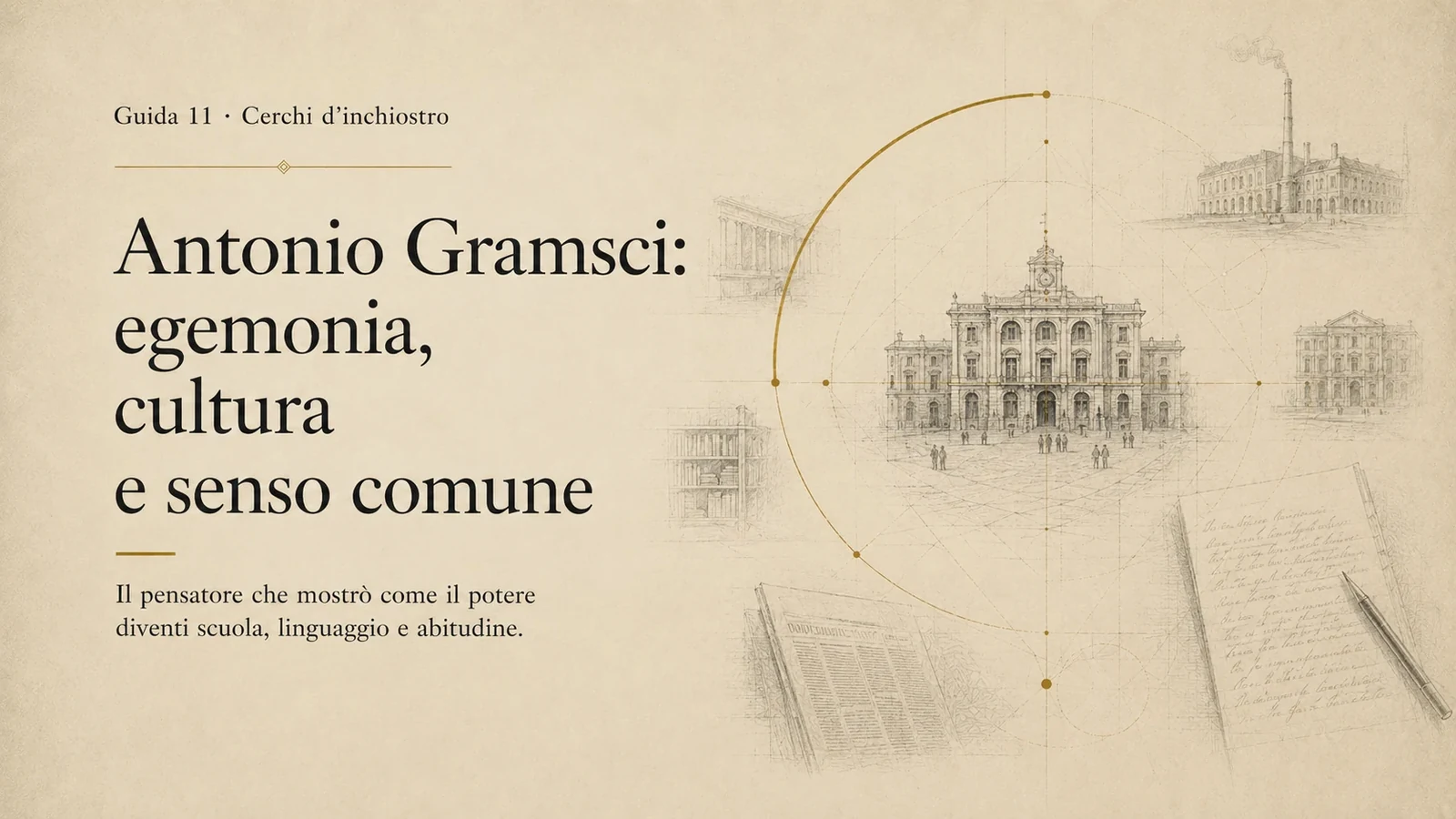
Editorial cover for Antonio Gramsci: hegemony, culture and common sense.

Guide 11

Antonio Gramsci

Hegemony, culture and common sense.

How political order becomes normality through culture, institutions, language and consent.

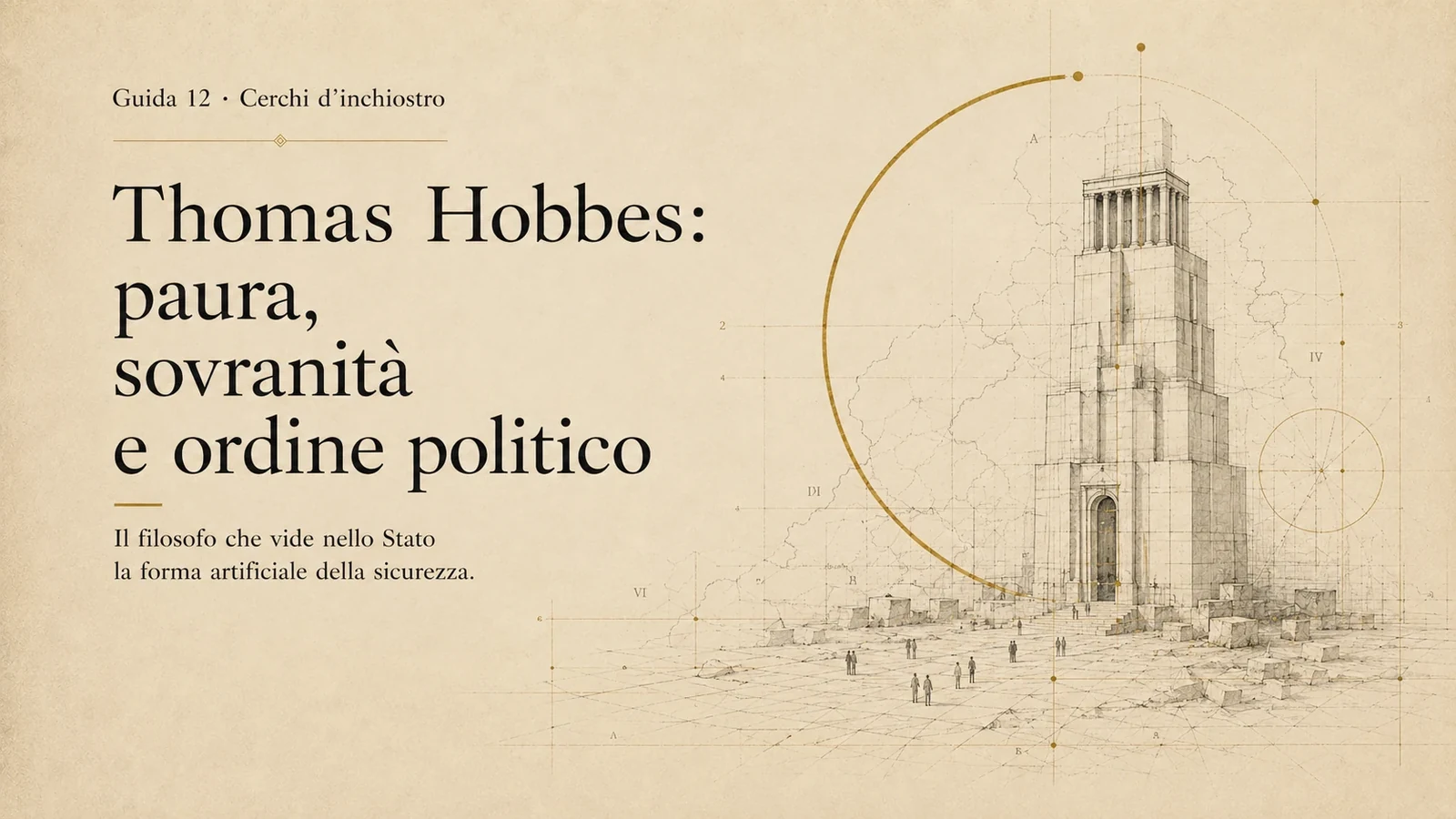
Editorial cover for Thomas Hobbes: fear, sovereignty and political order.

Guide 12

Thomas Hobbes

Fear, sovereignty and political order.

Why vulnerable people authorize common power — and why protection always raises the question of limits.

English triad · 05

Interpretation, money, exchange.

Interpretive competence; comparable value; trust and cooperation among strangers.
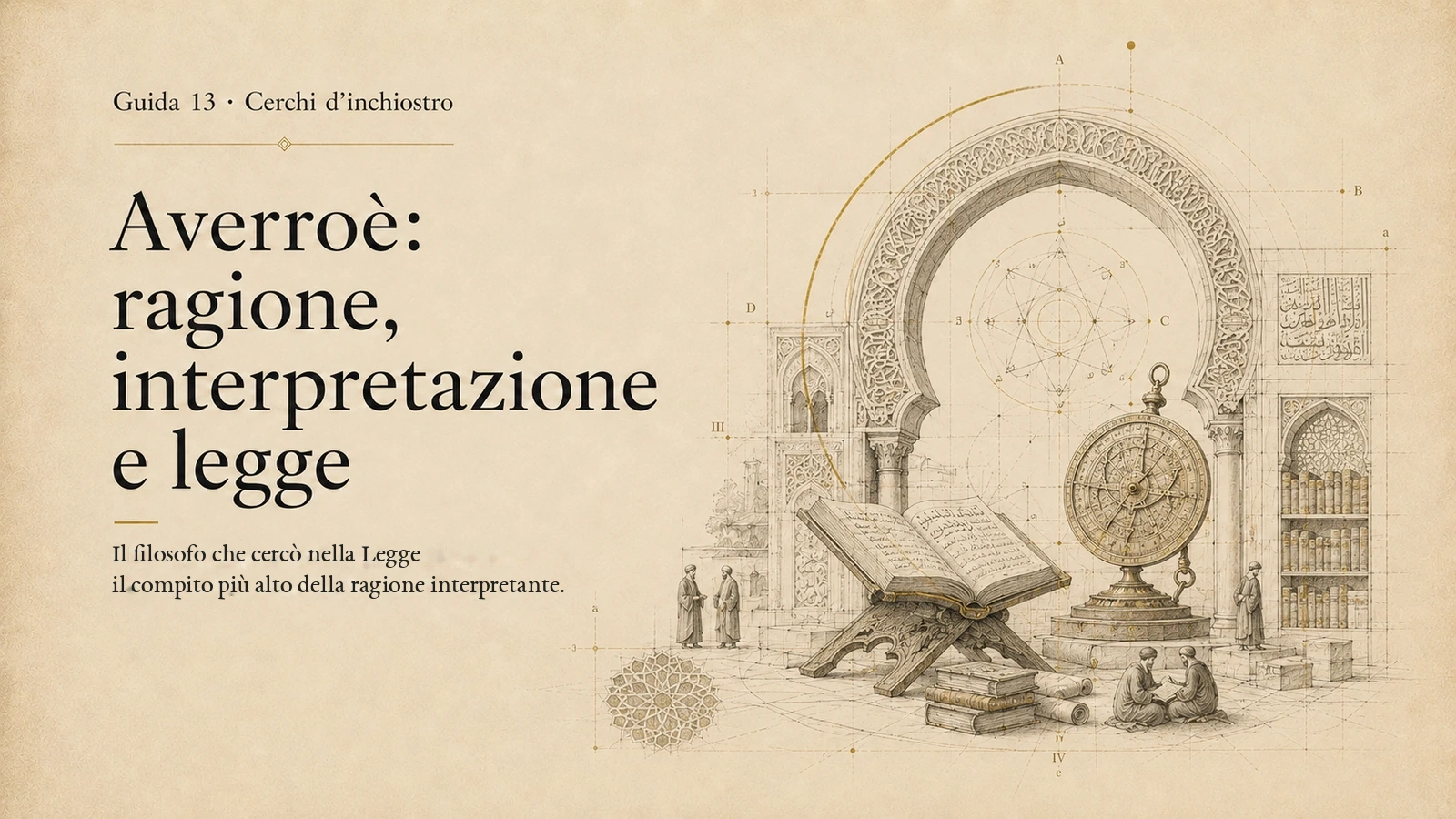
Editorial cover for Averroes: reason, interpretation and law.

Guide 13

Averroes

Reason, interpretation and law.

Why access to an authoritative text still requires method, competence and responsibility.

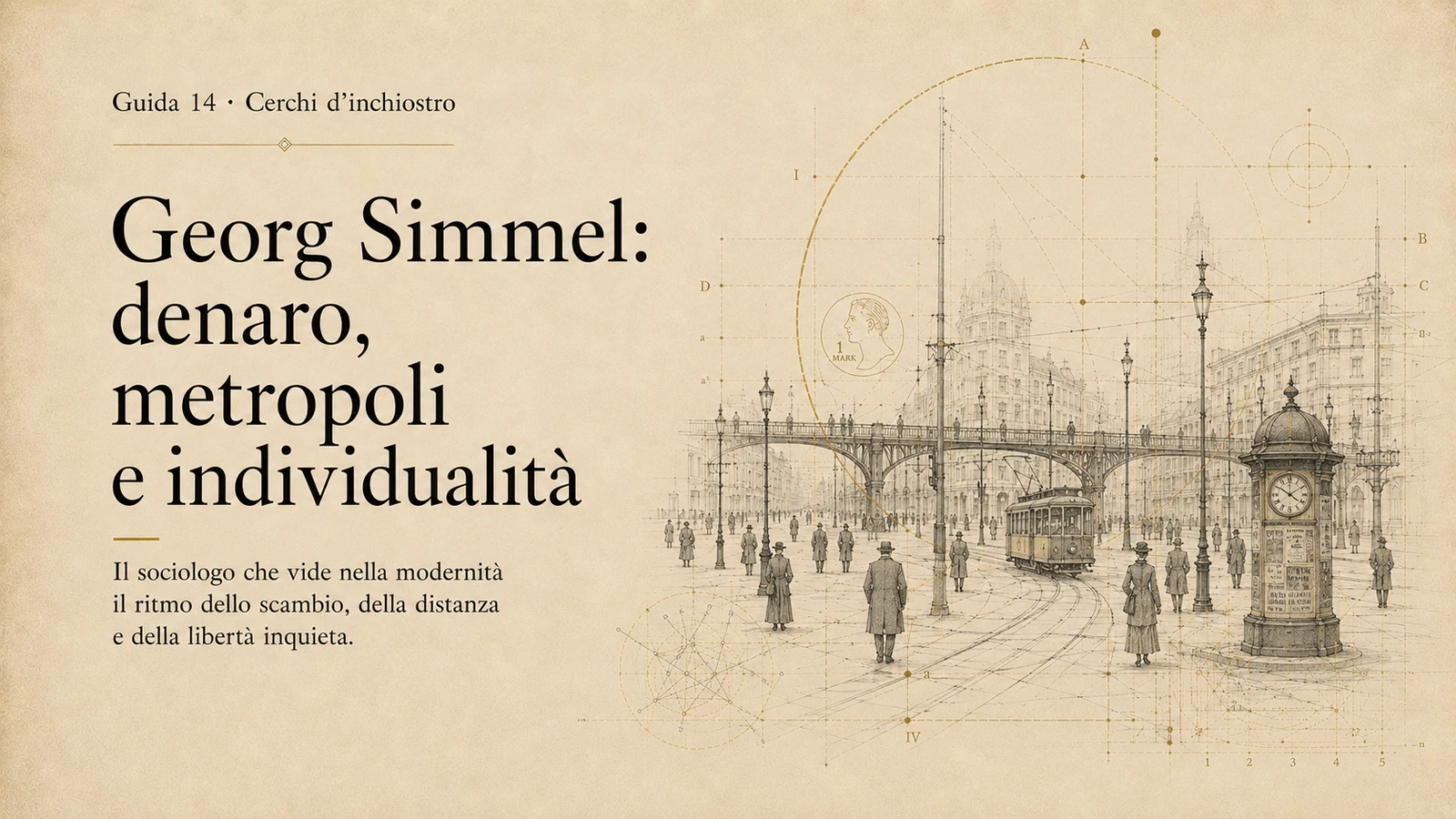
Editorial cover for Georg Simmel: money, metropolis and individuality.

Guide 14

Georg Simmel

Money, metropolis and individuality.

Modern freedom expands through abstraction while more of life becomes translatable and comparable.

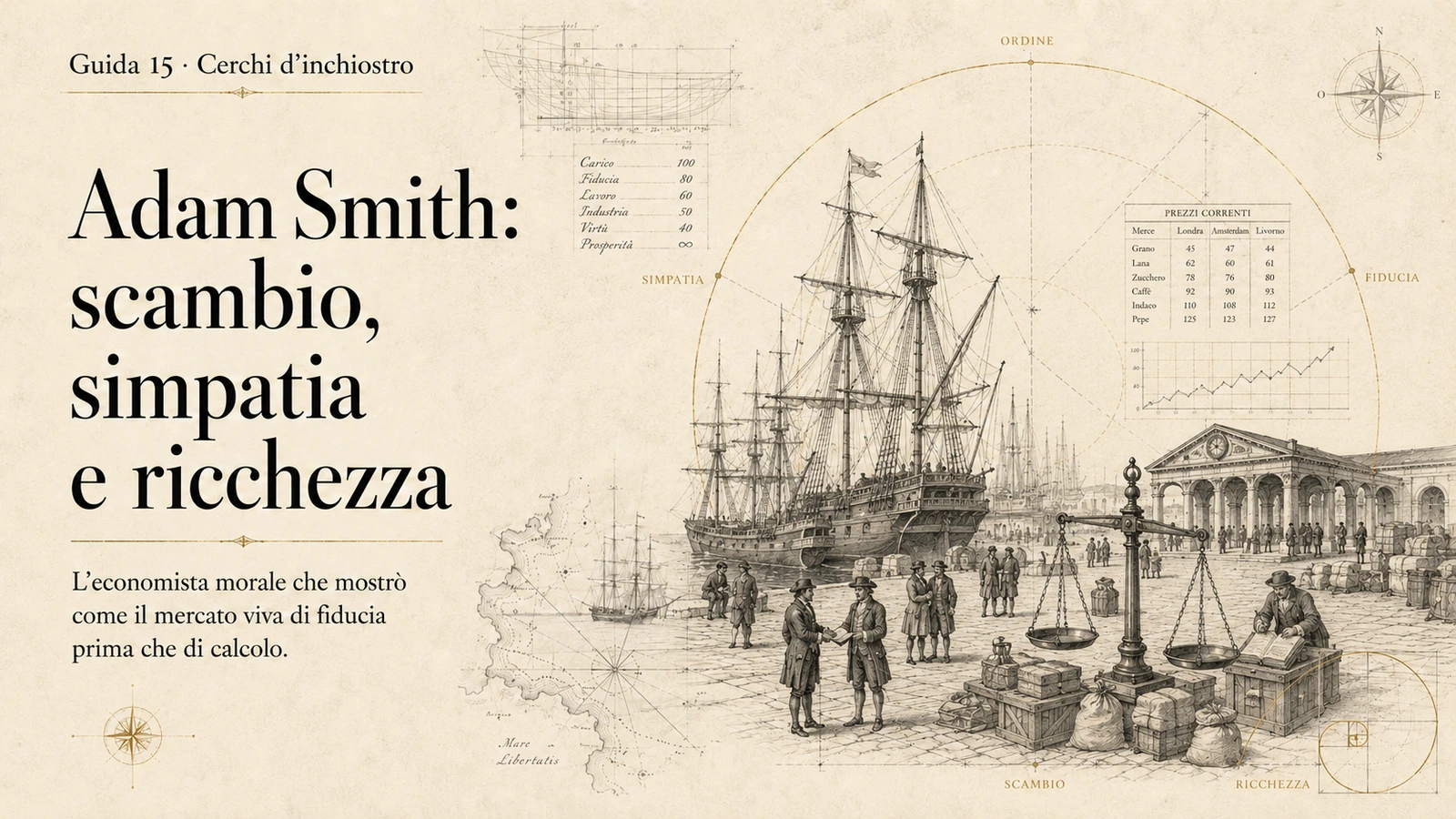
Editorial cover for Adam Smith: exchange, sympathy and wealth.

Guide 15

Adam Smith

Exchange, sympathy and wealth.

Commercial cooperation among strangers depends on moral judgment, credible promises and civil institutions.

English triad · 06

Republic, opinion, decision.

The common thing; democratic opinion and civic capacity; education and procedures of collective judgment.
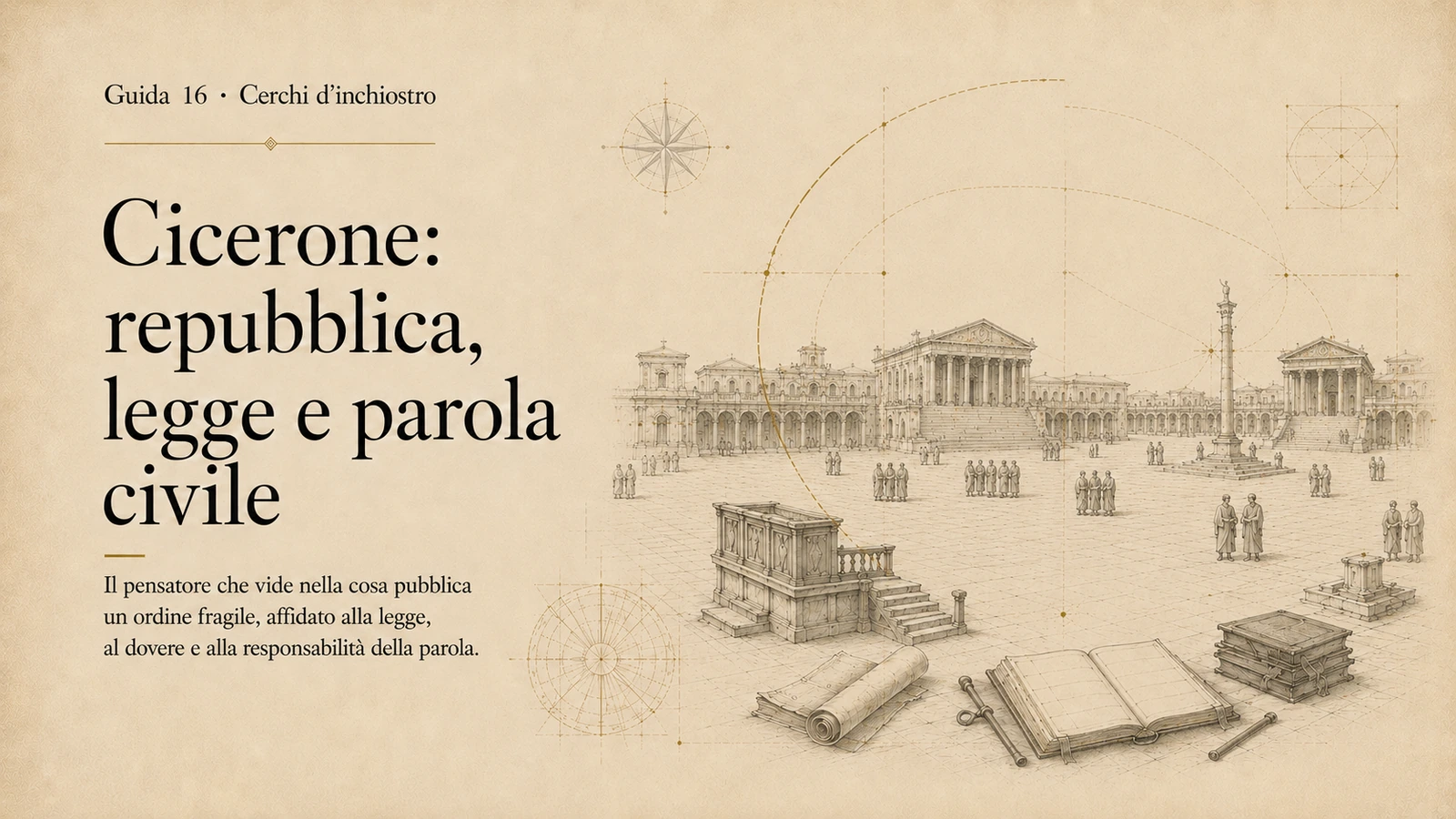
Editorial cover for Cicero: republic, law and civic speech.

Guide 16

Cicero

Republic, law and civic speech.

The common must remain larger than every temporary faction and every emergency claim.

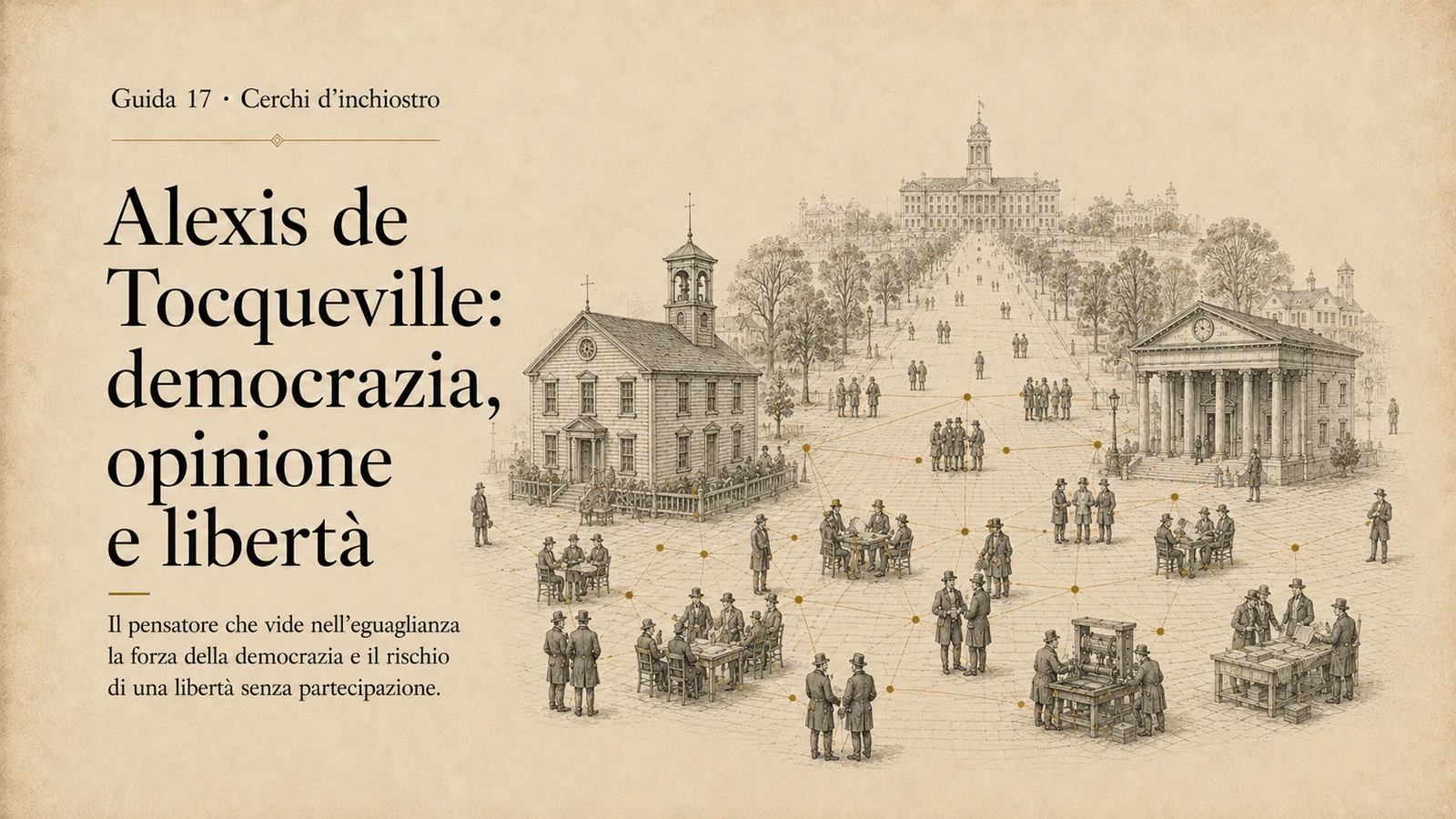
Editorial cover for Alexis de Tocqueville: democracy, opinion and liberty.

Guide 17

Alexis de Tocqueville

Democracy, opinion and liberty.

Equality becomes liberty only when citizens retain practical capacity to act together.

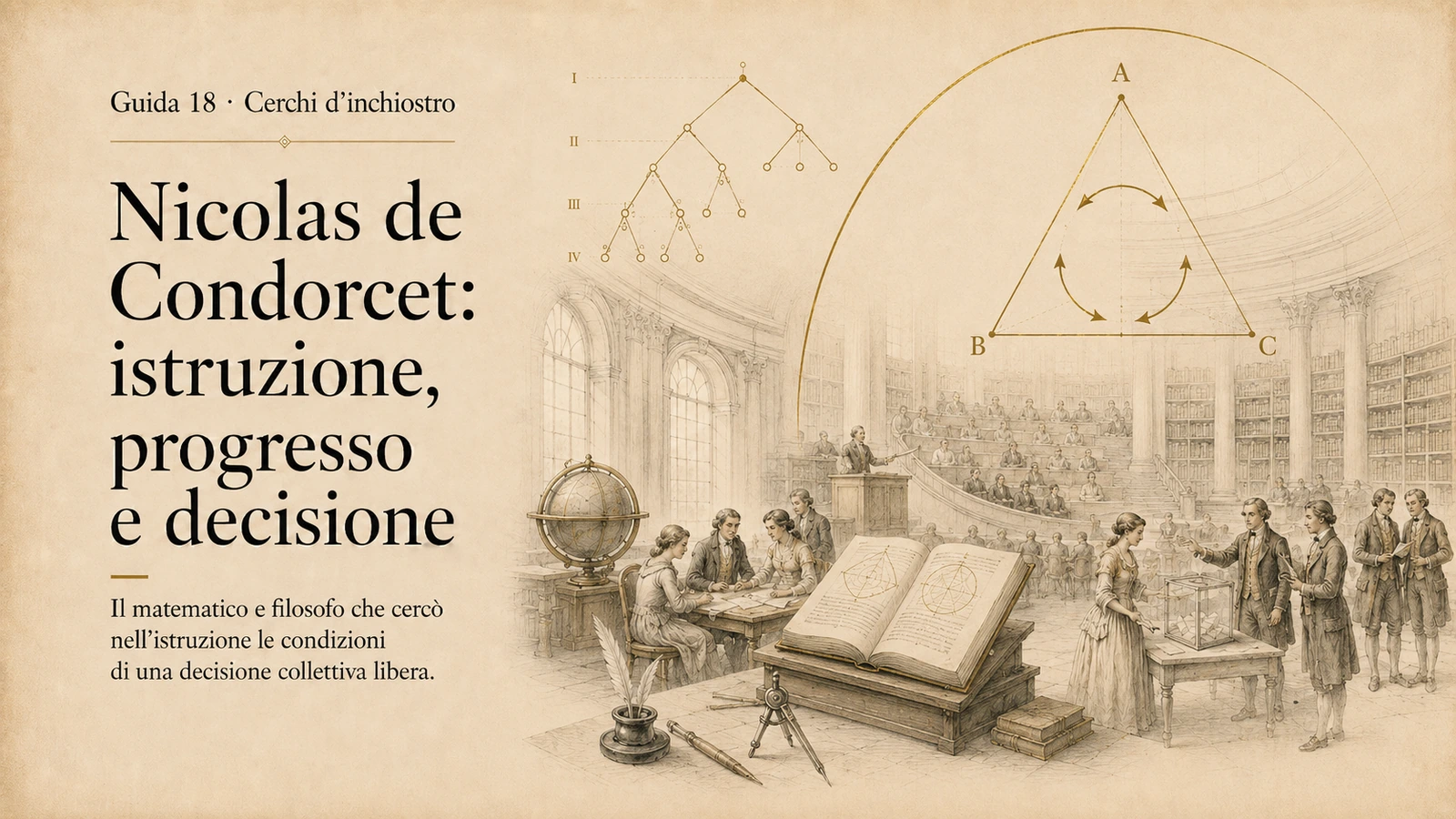
Editorial cover for Nicolas de Condorcet: education, progress and collective decision.

Guide 18

Nicolas de Condorcet

Education, progress and collective decision.

Democratic quality depends on the formation, independence and revisability of judgment.

English triad · 07

Elite, mass, government.

Institutional form; organized minorities; composition and circulation of ruling groups.
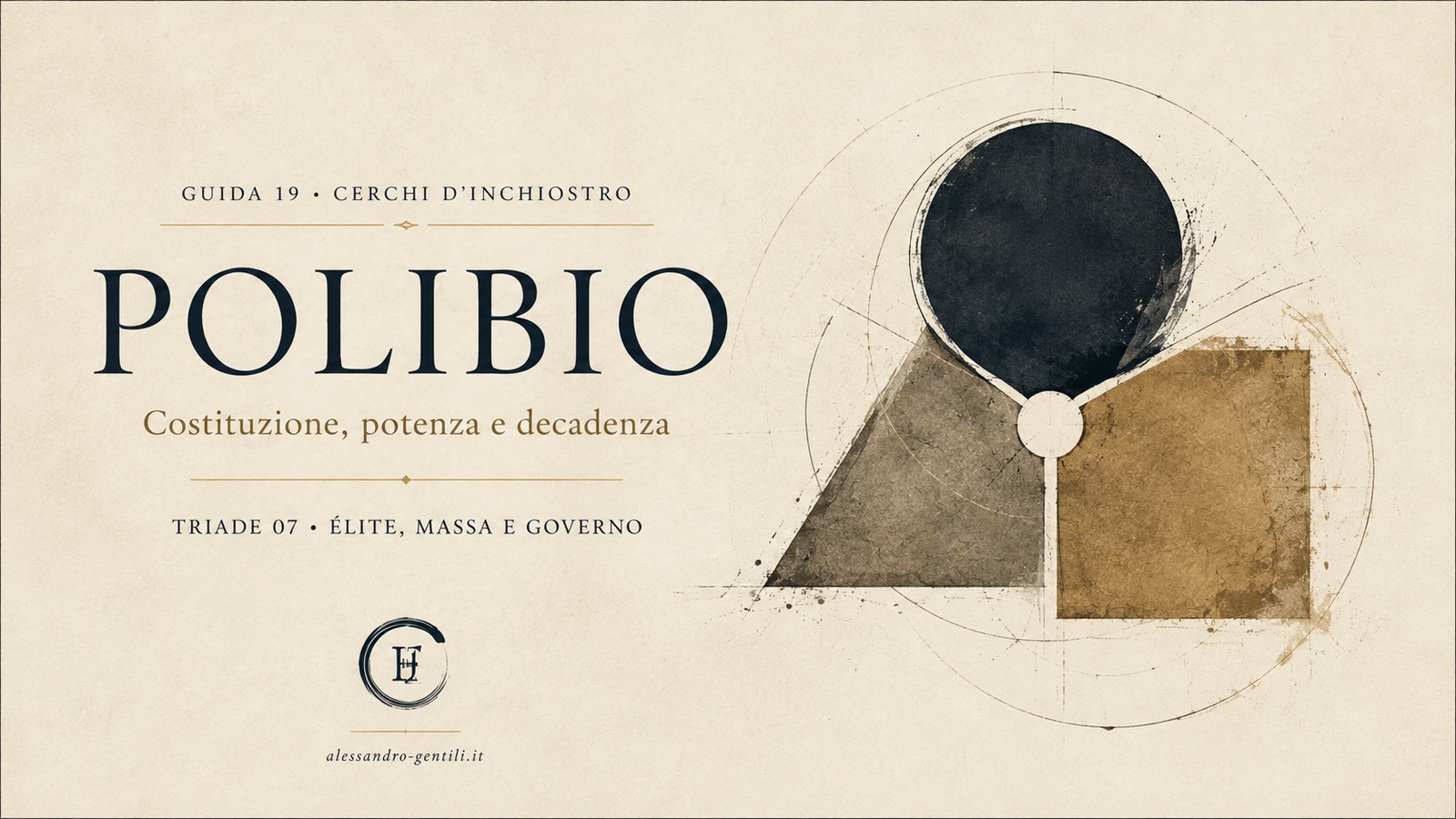
Editorial cover for Polybius: constitution, power and decline.

Guide 19

Polybius

Constitution, power and decline.

Political strength depends on limits and interdependencies that success can later erode.

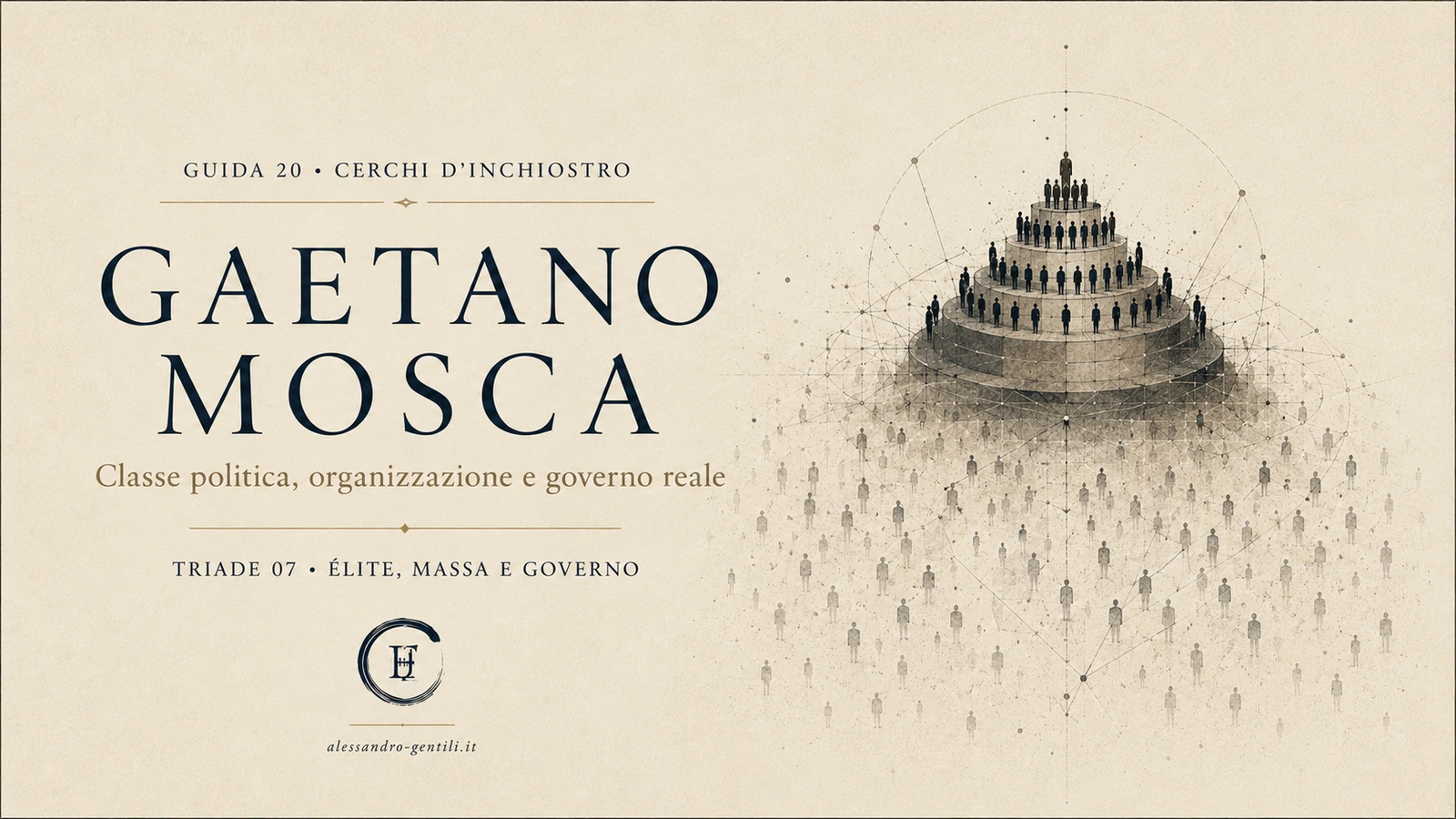
Editorial cover for Gaetano Mosca: political class, organization and real government.
Guide 20

Gaetano Mosca

Political class, organization and real government.

Organization gives minorities continuity; democratic freedom requires visibility, contestability and replacement.

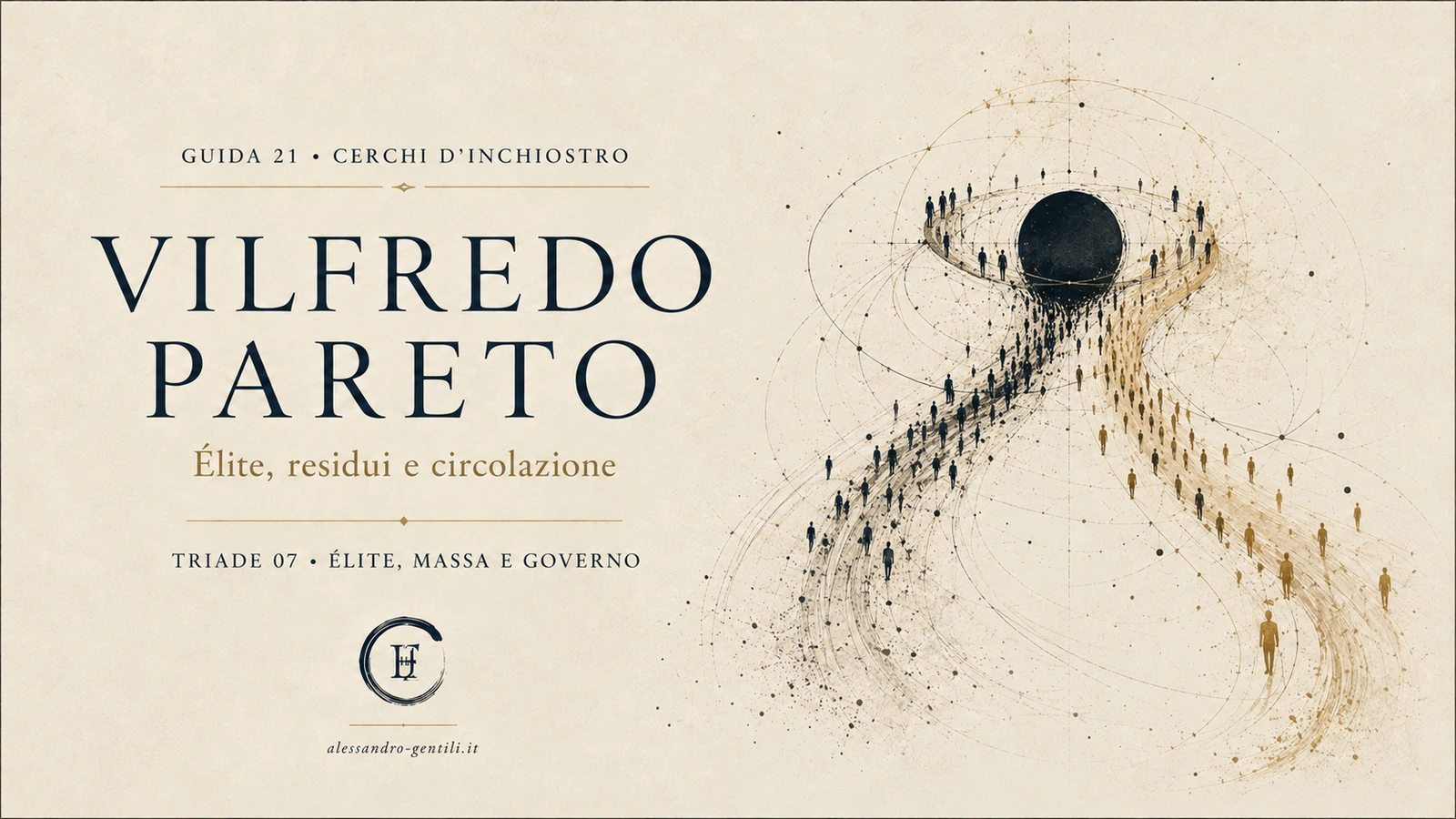
Editorial cover for Vilfredo Pareto: elites, residues and circulation.

Guide 21

Vilfredo Pareto

Elites, residues and circulation.

Ruling groups can retain position after their criteria of selection cease to match a changing society.

How the project works

A guide is a node, not an endpoint.

Author pages connect biography, works, concepts and present-day tensions. Triads then place three authors around a shared question. Themes gather the questions that recur across different authors. The aim is not to reduce complexity but to make relations navigable.