Il futuro degli altri
Who gets to shape the future when institutions struggle to keep pace with technological change?
Read the English noteAn atlas for reading the present
What we accept as normal has a history. So do our desires, our institutions and the words we use to understand them.
This editorial project by Alessandro Gentili brings cultural reading and strategic thinking into the same inquiry.
Begin with a question33 author guides 11 reading triads In English
01 / Ways into the work
Choose a question. See what three different thinkers bring to it, then follow a thread into the guides.
These are editorial relations, not claims of historical influence. Each guide preserves the thinker’s distinct argument and context.
02 / The wider atlas
Cerchi d’inchiostro — Circles of Ink — reads authors in relation. A guide opens one body of thought; a triad brings three perspectives to a shared question; a theme crosses between them.
03 / Essays with English notes
The essays follow power from the institutions that exercise it to the places that live with its consequences. The full texts are in Italian. Selected essays include English editorial notes that set out the argument.
Who gets to shape the future when institutions struggle to keep pace with technological change?
Read the English note
What can a place at the margins tell us about the decisions made far from it?
Read the English noteEnglish notes in the Italian essay index
04 / From reading to practice
The same attention to context, relations and consequences informs the professional work: making a position clear, giving work a method and building systems that remain accountable.
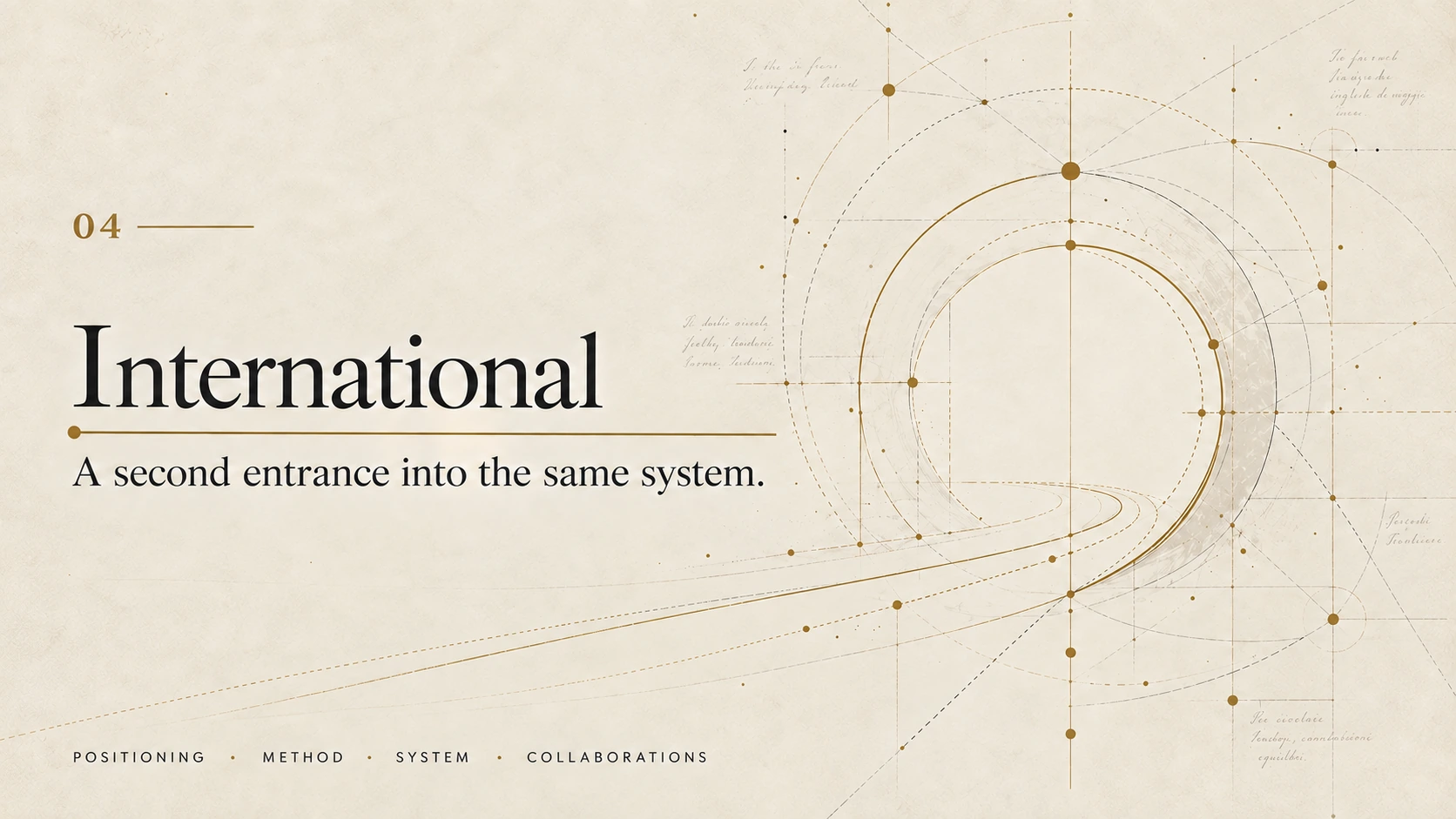
The connection between an intellectual position and the value it can bring to a real context.
Read PositioningHow interpretation becomes a sequence of choices, checks and deliberate execution.
Explore the MethodHow AI-supported work connects knowledge, tools and human responsibility.
Read the SystemAbout this edition
English is an edited entrance into the project, with 33 author guides and eleven complete triads. The essay archive remains in Italian, with English notes on selected texts.